
All Sociedades Limitadas must use Verifactu-compliant invoicing software once the regulation enters into force. The penalty for using non-compliant software reaches €50,000 per year. This guide covers exactly what your SL needs to do, when the deadline falls, and how to verify you're covered before the AEAT comes looking. For the full picture on the regime itself, see our guide to Verifactu.
Yes. Verifactu applies to every business and professional that uses a computer system to issue invoices and is subject to Impuesto sobre Sociedades (IS) or IRPF. Every SL pays IS, so every SL is in scope. For everything else involved in running one, see our guide to limited companies (SL) in Spain.
There is one exception. If your SL already falls under the mandatory B2B electronic invoicing obligation (the Ley Crea y Crece mandate, aimed at companies above €8 million annual revenue) and you issue certified electronic invoices through an accredited platform, Verifactu is not an additional requirement on top. For the vast majority of SLs below that threshold, Verifactu is the compliance path.
If you currently invoice through spreadsheets, Word documents, or software that hasn't been certified, you need to migrate before your deadline.
Real Decreto-ley 15/2025 (published in the BOE on 3 December 2025) reset the calendar. The current mandatory dates are:
Voluntary use is open now. If your SL opts in early, the same penalty regime applies from the day you start using a Verifactu system. If your SL is already in the SII regime (large companies and VAT monthly-return groups), you're exempt: SII already submits your invoice data to AEAT, so a separate Verifactu setup isn't required.
These dates have moved once already. Treat 1 January 2027 as real for planning purposes. Waiting for a further delay is not a strategy.
Verifactu is a technical standard, not a filing you submit. Your responsibility is to use software that meets it. Under Real Decreto 1007/2023 and Orden HAC/1177/2024, a compliant system (a "Sistema Informático de Facturación" or SIF) must:
Article 201 bis of the Ley General Tributaria, introduced by the 2021 anti-fraud law, sets the fine structure. These apply to your SL, not to your software vendor. Choosing non-compliant software is your liability, not theirs.
These layer. If your SL both fails to issue an invoice and runs non-compliant software, more than one article can apply in the same procedure. If invoice manipulation also produces an under-declared tax liability, Articles 191 to 195 LGT add a surcharge of up to 75% on the unpaid tax, and amounts defrauded above €120,000 open criminal liability under Article 305 of the Código Penal.
Work through this in order. Each step assumes the one before it is done.
Once your software is updated, run through this before you issue another invoice:
If any of these checks fail, contact your provider before issuing another invoice.
"Verifactu only applies to autónomos." No. The obligation covers every entity subject to IS or IRPF that uses billing software. Your SL is fully in scope.
"If my SL is VAT-exempt, Verifactu doesn't apply." VAT exemption and Verifactu compliance are unrelated. The regulation governs your invoicing system, not your VAT status. A VAT-exempt SL still issues invoices and must comply.
"We only issue a handful of invoices a year, so the rules probably don't apply." There's no minimum invoice volume. One invoice a year is enough to trigger the obligation.
"My gestoría is handling this." Your gestoría handles accounting and tax filings. Which billing software your SL uses is an operational decision that sits with you. Your gestor can't make that choice on your behalf, they can only tell you if what you've chosen is compliant.
"The AEAT will send a warning before fining anyone." There's no warning system. Penalties apply when an inspection finds non-compliant software in use. By the time you hear from the AEAT, the violation is already on record.
Verifactu's dates have shifted once already, from 2026 to 2027, under Real Decreto-ley 15/2025. They could shift again. The obligation itself will not disappear, only the date by which it becomes mandatory.
Treat 1 January 2027 as real for planning purposes. A further delay doesn't mean the requirement has weakened, it means you have more runway to migrate cleanly instead of scrambling in December 2026. Check the AEAT's official Verifactu page or your software vendor's compliance updates for any change to the date, not general news coverage, which is often months out of date.
No. Verifactu and mandatory B2B electronic invoicing come from different rules. Verifactu governs how your billing software records and chains invoices internally. Mandatory electronic invoicing (under Ley Crea y Crece) governs the format you send invoices to clients in. Larger companies may need both. Most SLs only need Verifactu. See our explainer on the difference between Verifactu and the electronic invoice for the full breakdown.
Yes. The AEAT offers a free Verifactu-compliant tool. For a low-volume SL it's a legitimate option. For higher invoice volumes or more complex billing, dedicated software is usually more practical.
Only invoices your SL issues. Invoices you receive from suppliers are not in scope.
Yes. Verifactu applies to every invoice your SL issues, regardless of where the client is located.
Not until your enforcement date passes. Before 1 January 2027, you're not in violation. Migrating early is still strongly recommended, deadlines have a way of arriving faster than expected.
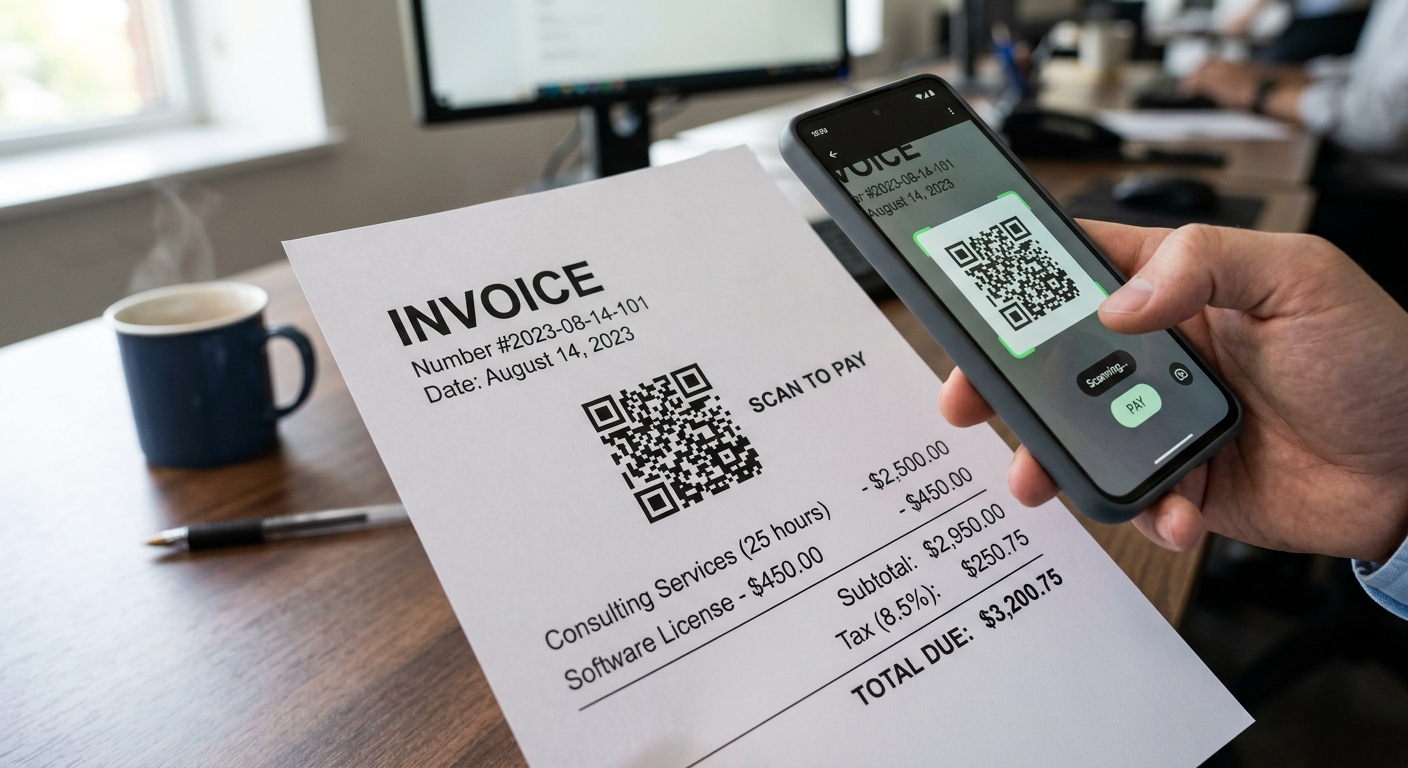
Slightly. Every invoice must carry a QR code. Otherwise the format, PDF or paper, doesn't change.
If your SL issues any invoices, yes. If it has zero invoicing activity, the practical obligation may not arise in practice. Confirm the specifics with your accountant.